
So, this is not my first kimchi batch, nor my second, nor my seventh…but it IS my first with the new, fancy-schmancy fermentation crock. I’m curious how it will turn out!
I learned many lessons as I made different batches and tweaked my “starting” recipe several times. The starting recipe was from Cook’s Illustrated DIY Handbook (I’ve attached it, and my Lessons Learned that drove my recipe modifications at the bottom of this page). SO LET’S MAKE SOME KIMCHI, SHALL WE? Let’s go!
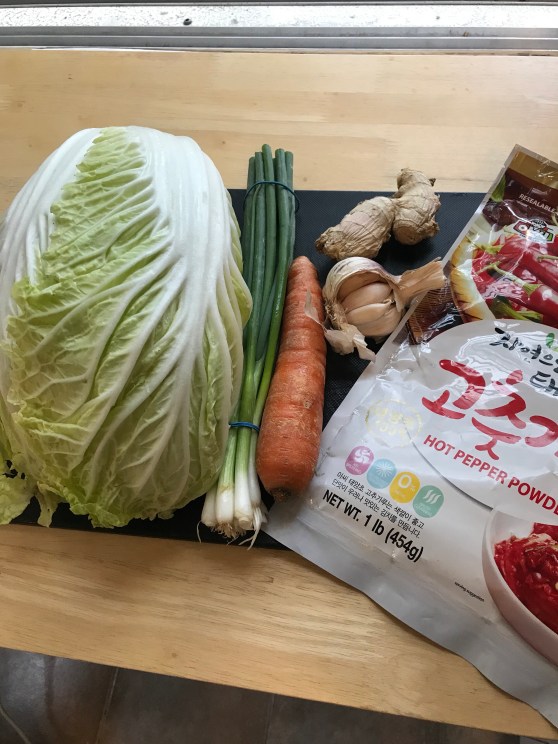
Fig 1.0: The Usual Suspects
For YEG Homestead kimchi, you’re going to need:
1 head (2-3 lbs) suey choy
1 carrot
2 bunches green onions
5 cloves good, big Ukrainian garlic (if you’re using the little white supermarket stuff, use 10), peeled
3-inch piece of ginger, peeled and thinly sliced
2 Tbsp coarse kosher or pickling salt
1/4 cup fish sauce
1/4 cup tamari or soy sauce
1 Tbsp sugar
1/2 cup Korean chili powder*
You also need a food processor, blender, or Magic Bullet to make your paste, and a big jar (preferably flip-top) to ferment and store your kimchi.
COLE’S NOTES INSTRUCTIONS (for those who don’t need no stinkin’ pictures):
Chop the suey choy into bite-sized pieces. Toss with the salt, let sit 1 hour. Julienne the whites of both bunches of onions and the carrot. Save the tops of one bunch of onions for another use, and cut the other bunch into 2-inch lengths. Puree the garlic, ginger, fish sauce, soy sauce, and sugar until smooth. Add the chili powder and puree until smooth (you may need a bit of water to thin in order to puree). Rinse the choy in cold water and let drain a few minutes. Combine the choy, the onions, the carrot, and the chili paste until everything is coated. Pack into sterilized jar and let sit at room temp, in the dark, for 24 hours. Let cure in fridge for 5-7 days and enjoy!
INSTRUCTIONS FOR THE REST OF US (who like us some pictures!):
To begin, peel off a few of the manky outer leaves of the suey choy (they’re always wilty and ragged and I don’t like the looks of them – but that’s me). Core the choy and cut into bite-sized pieces, like so:
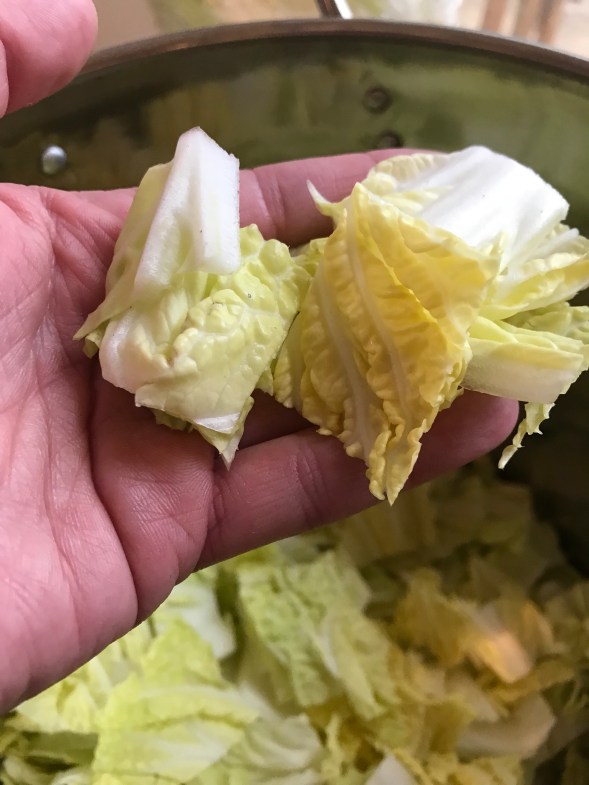
Fig 1.1: The Homestead’s interpretation of “bite-sized” – quiet, you!
Toss the choy with the 2 Tbsp of salt, give a good stir, and let sit for 1 hour. Because I am accustomed to making sauerkraut, I generally get a little enthusiastic with the “good stir” part and end up busting up some of the bits, but you stir however vigorously you’d like – just make sure the salt is all the way through your choy.
As for what to rest it in, whatever fits and isn’t uncoated cast iron (if you look closely, you’ll see that my Choy Resting Vessel is, in fact, my big stainless steel stockpot. The Homestead doesn’t have a lot of storage space, so we need all equipment to multi-task!).
I spend my time during the Great Resting of The Choy sterilizing my equipment (see the bottom of this post for details) and preparing my other vegetables.
Chop the whites off BOTH bunches of onions, saving the tops of one bunch for your kimchi and the shoving the other bunch in your fridge for whatever strikes your fancy (I generally make green onion cakes with the second bunch right after making kimchi. Stay tuned for that post!):

Fig 1.2: Not a leek
Julienne the whites (be careful – they’re slippery and roll around), then chop the greens into 2-inch lengths. Set aside.
Peel the carrot and cut into 2-inch matchsticks (see the pic above). Set aside with the onions.
Peel and top the garlic cloves, and peel and slice the ginger finely. Chuck into your food processor or (in my case) Magic Bullet – whatever you’re going to use to make your paste.
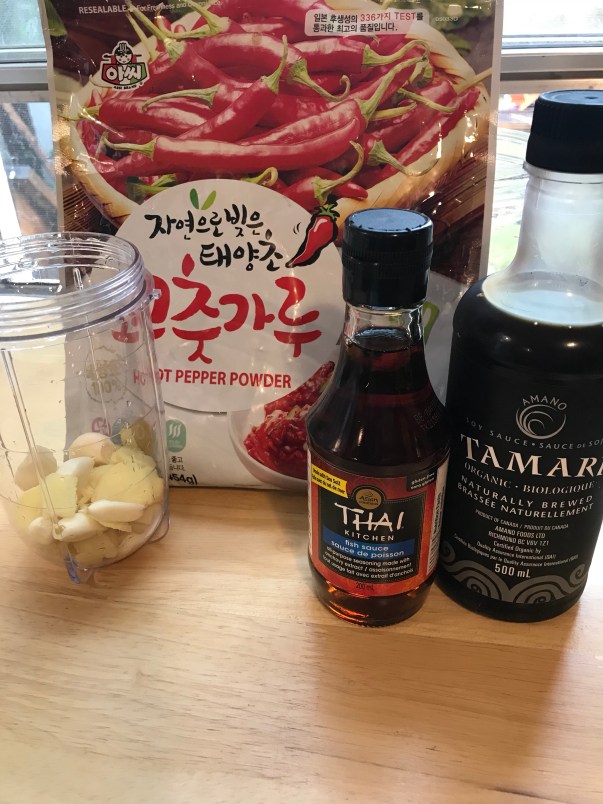
Fig 1.3: All the fixins for Satan’s Toothpaste
Add the fish sauce, the tamari, and the sugar. Whizz until all the ginger and garlic has been pureed:
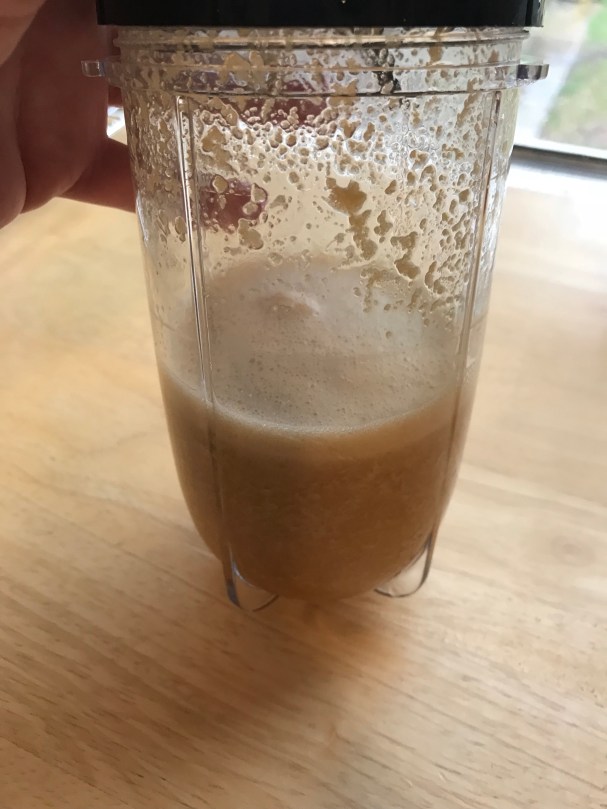
Fig 1.4: Not a smoothie; do not consume.
LESSON LEARNED:
Do this BEFORE you add the Korean chili powder!! The first time I made kimchi, I put the powder in at the same time (as instructed), and ended up with big, unpureed hunks of ginger and garlic. It ends up a PASTE, after all, and thick paste isn’t conducive to pureeing hard veg!
Once your ginger and garlic have been reduced to sludge, add your chili powder (IMPORTANT SAFETY TIP: this stuff is death if inhaled. Be gentle with your measuring and adding, because if it flies up your nose you will be a very hurtin’ unit!):
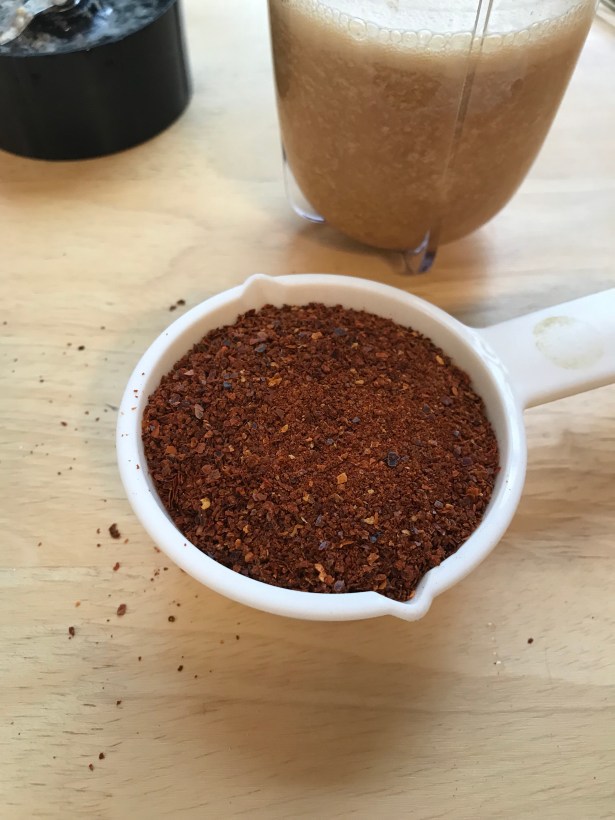
Fig 1.5: Yes it’s a lot. You’ll thank me later.
Whizz everything around until well blended. Depending on what you’re using as a whizzer (food processor, blender, Magic Bullet, etc), you may have to add a little water to loosen it up enough to whizz around.
Once completely blended, voila! You have made Satan’s Toothpaste! (Um, I mean: your kimchi paste!) (But really, at the Homestead it’s known as Satan’s Toothpaste. Feel free to appropriate the term for your own use.)
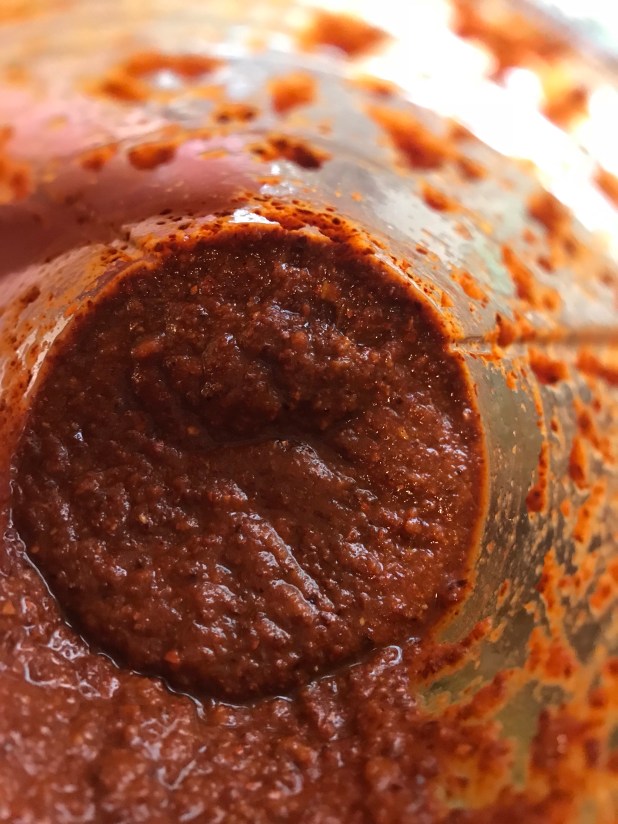
Fig 1.6: Taste Satan’s Toothpaste at your peril
Set aside your Satan’s Toothpaste for the moment. Dump your choi into a colander and give it a good rinse. Let it sit a few minutes to drain while you rinse and dry out your Choy Resting Vessel.
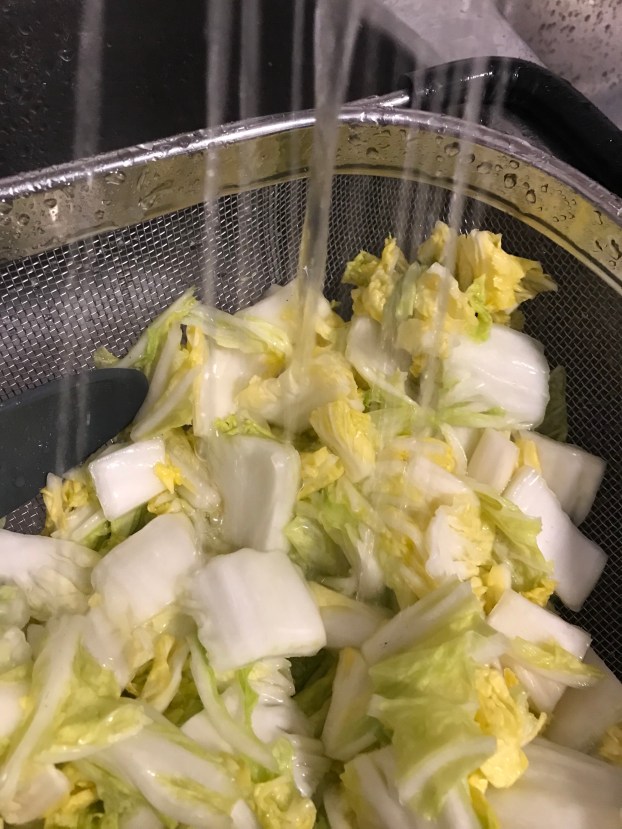
Fig 1.7: Everyone loves a shower
Dump your drained choy back into the Vessel and scrape in your paste:
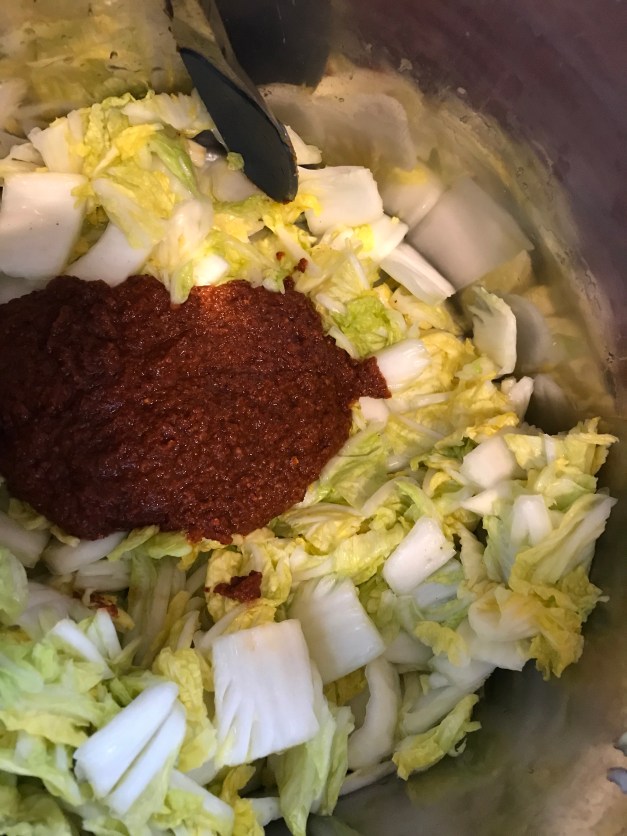
Fig 1.8: The ugly side of deliciousness
Add your onions and carrots and give everything a SUPER-good stir, making sure everything is nice and coated with fire-y paste goodness:
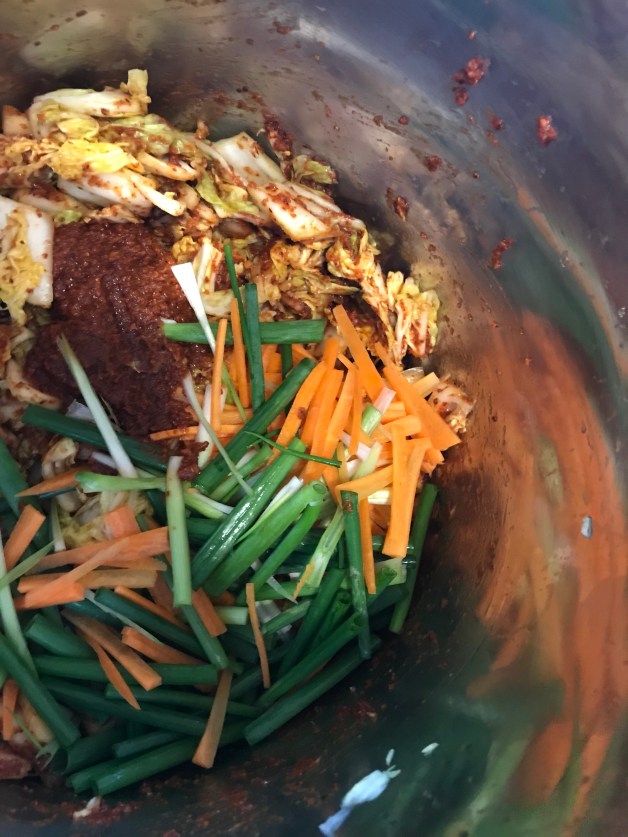
Fig 1.9: Now stir like a Ukrainian!
Once everything is thoroughly mixed, pack tightly into your sterilized jar or crock. Try to make sure that there are no airspaces, and that some juice squishes out at the top. You goal is to have all of the choy submerged, which should happen in the next 24 hours as more juice gets released.
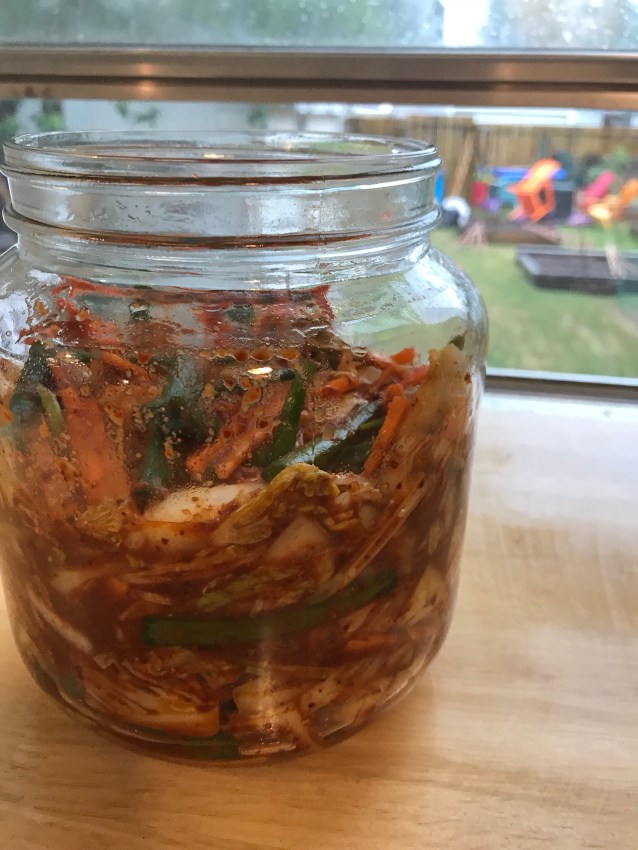
Fig 2.0: Airs pockets begone!!
FOR YOUR KIMCHI: Set your jar in a dark cupboard for 24 hours. After the 24 hours, pop in the fridge and start enjoying in 5-7 days! I’ve kept kimchi for up to 2 months in my fridge (I was on holidays – it usually NEVER lasts that long due to household consumption!). If it starts to go slimy, fizzy, moldy, or smell “off” to you, chuck it and make a new batch. Which, now that you’ve made one, you know is a piece of cake!
FOR MY FANCY-SCHMANCY CROCK-FERMENTED KIMCHI, however…THIS time I’m trying the true ferment with my new crock at room temp for 3-5 days to see if it makes a difference. So, I add my weights (these ensure that everything stays submerged so that I don’t get spoilage – not a serious problem when I’m fermenting in the fridge, but will be at room temp):
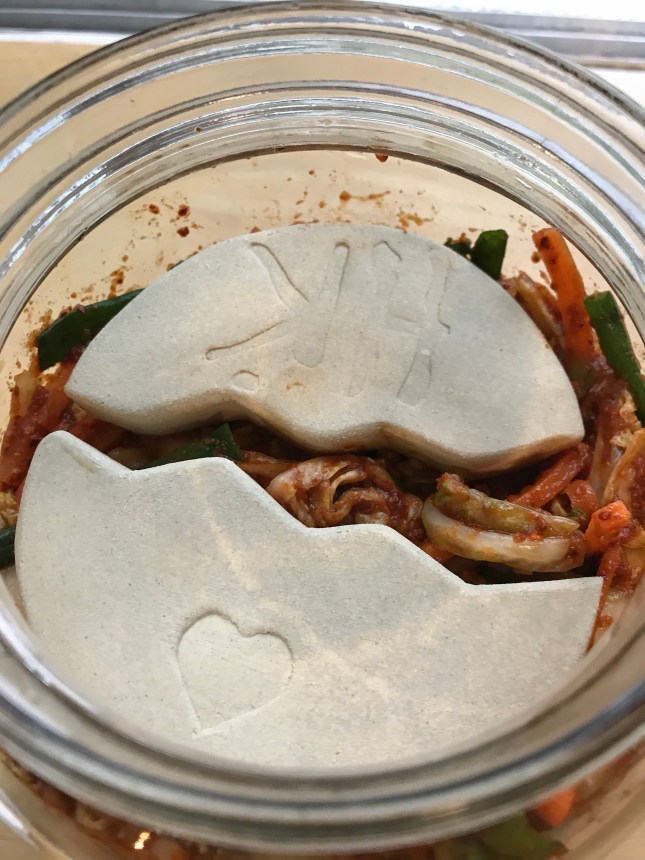
Fig 2.1: Awww, the weights love us!
And on goes the lid with the carlock seated in place. The carlock helps to vent any gas produced by the fermentation so that my jar doesn’t blow its top or explode – NOT a problem if you’re refrigerating after 24 hours!
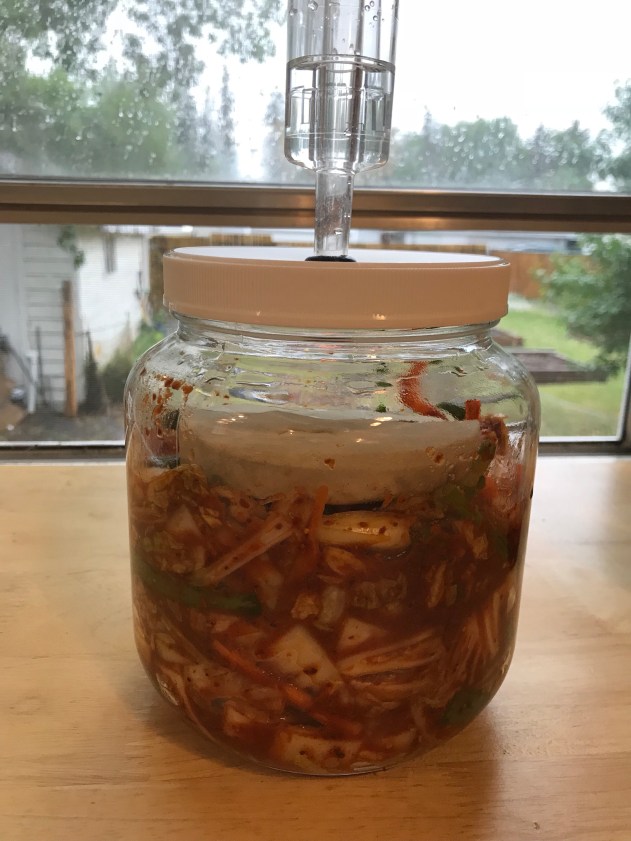
Fig 2.2: Let the fermentation begin!
And now we wait and see what will happen!
RECIPE LESSONS LEARNED:
Cook’s Illustrated Recipe:
1 large head napa cabbage (2-1/2 pounds, cored and cut into 2-inch pieces)
5 teaspoons Diamond Crystal kosher salt
20 garlic cloves, peeled
1/2 cup Korean chili powder
1/3 cup sugar
1/4 cup fish sauce
1/4 cup low-sodium soy sauce
1 (1-1/4 inch piece) fresh ginger, peeled and sliced
1 Tbsp salted shrimp
16 scallions, cut into 2-inch pieces
1 large leek, white and light green parts only, cut into 2 by 1/4-inch strips and washed thoroughly
1 carrot, peeled and cut into 2-inch-long matchsticks
LESSONS:
First, “Diamond Crystal kosher salt”?? I can get kosher pickling salt from any local grocery store. So we’re going with that, thanks. Worked just fine!
Second, who has “salted shrimp” hanging around? I looked at other recipes and quite a few of them didn’t call for shrimps – they just had the fish sauce. So, I omitted the shrimp paste right from the outset. Worked just fine!
Third, the recipe called for low-sodium soy sauce. Again, don’t keep that in the house on a regular basis. I use tamari for all things, so I subbed that in. Worked just fine!
Fourth, I didn’t want to mess with leeks. Too expensive and fiddly to clean. Instead, I used the white parts of 2 bunches of green onions and julienned them. Worked just fine!
BATCH 1: Way too sweet and way too garlicky. To be fair, I use enormous local garlic, which packs a punch, but did use quite a few less than the recipe called for (10 rather that 20) – and it was still too much! I cut the sugar and the garlic way back.
BATCH 2: As with Batch 1, way too salty. In the recipe I was using, the cabbage is salted but NOT rinsed. In looking at other kimchi recipes, most of them call for rinsing the cabbage after salting.
All subsequent batches were just fine, until…
BATCH 8 (or thereabouts): Thinking I was a genius, I figured I could substitute a locally-grown savoy cabbage for the imported suey choy. DON’T DO IT. The quasi-kimchi-like substance was dry, tough, and I was thoroughly disappointed. This year I’m planting suey choy, dammit!
LET’S TALK STERILIZING STUFF FOR A MINUTE…
Kimchi is fermented. Therefore, your ferment is only as clean as everything that touches it. The Choy Resting Vessel is OK, because you’re using a ton of salt AND rinsing, so if you gave it a good wash in soap and a good rinse in hot water you’ll be fine. But from here on in, we sterilize that which will touch your ferment. Sterilize whatever jar you’re going to use as you would if you were canning. Dunk the tongs you’re going to use to stir into boiling water. Google canning if you need more help (and we’ll talk more about this during canning season!).
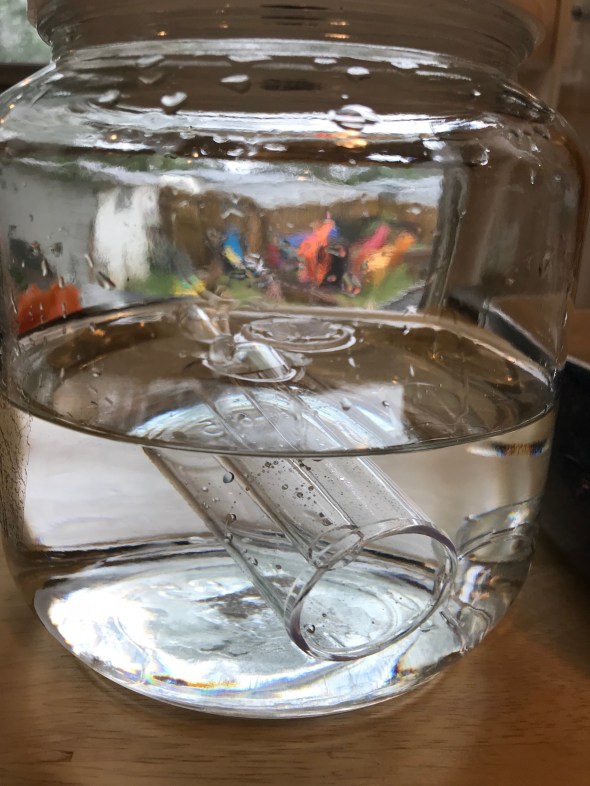
However, my swanky new Holy Kraut fermenter came with express instructions to NOT use boiling water, only hydrogen peroxide to sterilize. Okaaaay…but they didn’t give a ratio of dilution. I went 1:1 water to peroxide and hoped for the best. Into the jar went the carlock and lid, as well:
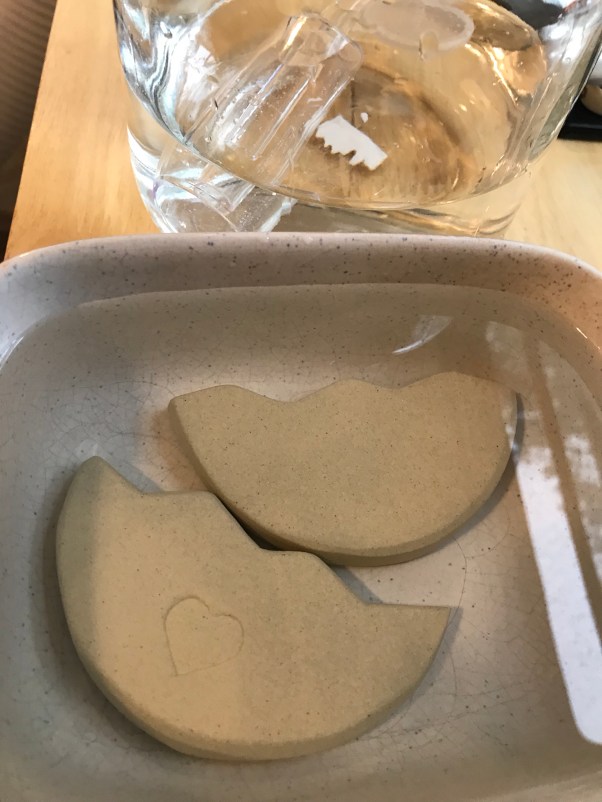
The weights ALSO had special instructions – no soap, no boiling water. Only vinegar water. Then let dry completely before using. Seems suspicious, but Ok, we’ll give ‘er a go:
I drained everything, gave my colander a boiling-water bath, and returned to my kimchi-making with now sterile equipment.
*I honestly don’t know how I lucked into the right chili powder. I lined up a couple of pictures from other recipes on the ‘net with the plethora of choices at Lucky Supermarket, and hoped for the best. And it was fantastic! I will absolutely look for it again.

 YEG Homesteader